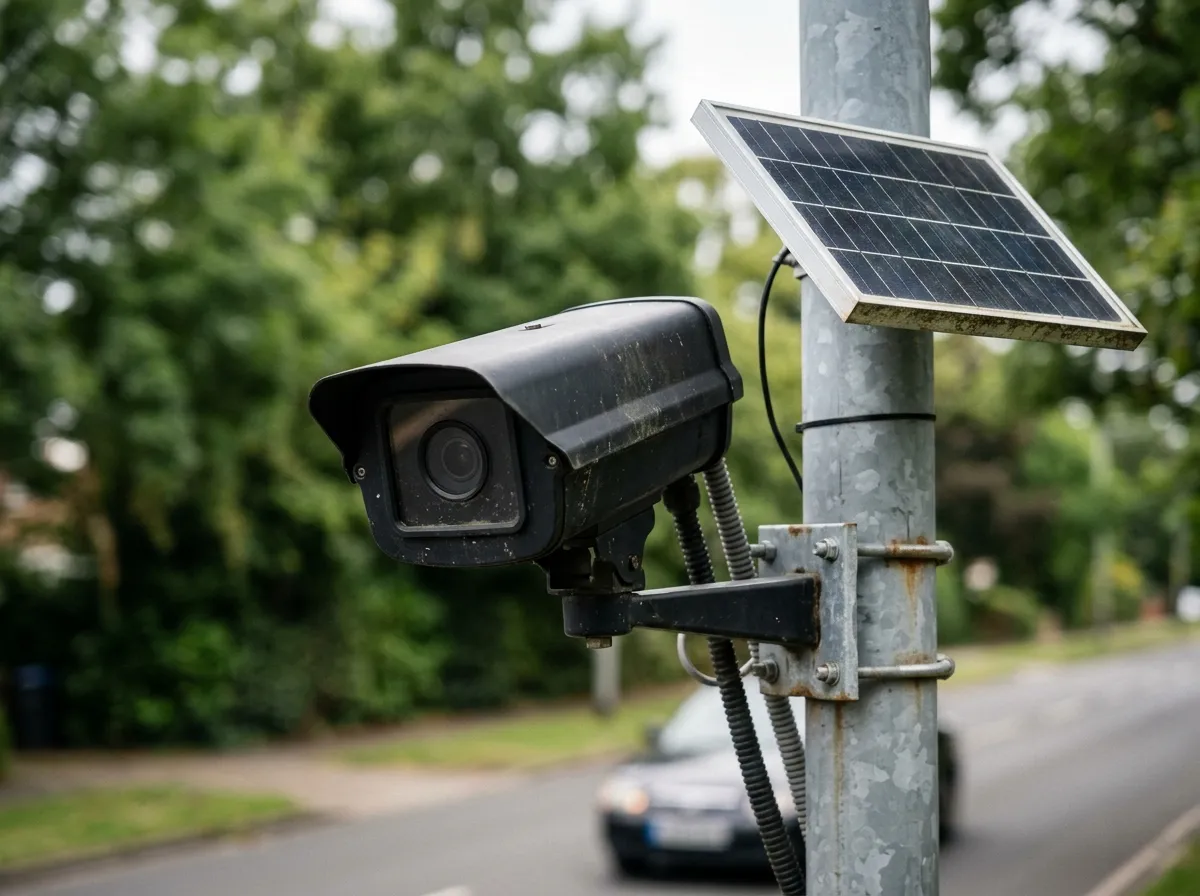
Murfreesboro's Flock cameras are automated license plate readers (ALPRs) run by the Murfreesboro Police Department's Real Time Crime Center (RTCC). They have become one of the most-discussed topics at City Hall in 2026. Residents have spoken about the system at City Council public comment meetings throughout 2026, and in September a routine drone contract was pulled off the Council's consent agenda because it included a Flock integration.
This explainer uses the city's own pages, MPD news releases, City Council agendas and minutes, and MPD's Flock transparency portal to cover what the system does, what it keeps and who can see it.
What Is the Real Time Crime Center?
According to the city, the RTCC uses fixed and mobile license plate readers, public safety cameras, gunshot detection devices and crime databases to give officers information during emergencies and to support detectives afterward. When a call reaches MPD's Emergency Communications Center, RTCC crime analysts start pulling from any technology deployed in that area to help the officers responding.
At the June 18, 2026 City Council meeting, an MPD presentation reported that in the first quarter of 2026 the center recorded 652 operational successes, helped clear 140 cases and contributed to the arrest of 129 wanted people, according to the meeting minutes.
How Do the License Plate Readers Work?
MPD's FAQ says the cameras photograph vehicles and use software to read the license plate. Each plate is compared against law enforcement databases of vehicles tied to active cases, such as stolen cars, stolen plates, missing people and Amber or Silver Alerts. When a match passes a camera, the system alerts MPD officers, the Emergency Communications Center and the RTCC.
MPD's transparency portal lists the hotlists the system alerts on as NCIC (the FBI's National Crime Information Center) and the NCMEC Amber Alert list. Its hotlist policy says a hit must be verified by a person before officers act on it.
Two recent MPD releases show how that works in practice:
- Oct. 4, 2026: an officer on South Rutherford Boulevard near John Bragg Highway got an ALPR alert for a stolen pickup, confirmed with dispatch that it was listed as stolen in NCIC, and then made a felony traffic stop. Two people with outstanding warrants were arrested.
- Sept. 19, 2026: after a strong-arm robbery on Center Pointe Drive, RTCC analysts used license plate readers and public safety cameras to find the suspect's car in Smyrna, where a 17-year-old was arrested with Smyrna police.
The city keeps a running list of cases on its ALPR Successes page, including retail theft rings, a gift card fraud case, shootings and stolen vehicles.
What the Cameras Do Not Do
According to MPD's FAQ and transparency portal:
- No traffic tickets or repossessions. The FAQ says ALPRs are not used for automated traffic enforcement or vehicle repossessions.
- No facial recognition. The cameras identify vehicles, not people. They are not connected to facial recognition and do not collect personal information about the people inside.
- No constant tracking. The FAQ describes each read as a "moment-in-time" capture of a vehicle passing a camera, not continuous surveillance.
- Not every image is reviewed. Images are looked at only when there is a lawful reason.
How Long Does Murfreesboro Keep License Plate Data?
Tennessee law, TCA 55-10-302, says captured plate data can't be kept more than 90 days unless it is part of an ongoing investigation.
MPD's FAQ says the department keeps ALPR data for 21 days before it is automatically deleted, and the "LPR Data Retention Length" on MPD's Flock transparency portal also reads 21 days. The overview paragraph on that same portal still says images are stored for 30 days. Chief Michael Bowen also told the Council on May 21, 2026 that the system retains data for 30 days, according to the minutes.
For the other RTCC tools, the FAQ says gunshot detection data is deleted after 30 days unless it is kept for an investigation, and public safety camera footage is stored for about 30 days.
Who Can Search the Data, and Who Is It Shared With?
MPD's FAQ says only RTCC personnel with an official law enforcement purpose can search ALPR data. The data is owned by MPD, is never sold, and is not shared with non-law enforcement agencies. It is encrypted and stored in AWS GovCloud.
Every search requires a reason. MPD's policy, General Order 627, governs the system. The FAQ says the audit log records the user, the search reason or case number, and the date and time, and the Crime Analysis Unit supervisor audits use. The transparency portal says search records are kept indefinitely.
The transparency portal also lists the organizations granted access to MPD's data. As of Oct. 12, 2026, it named 137 agencies, all in Tennessee. They include the Rutherford County Sheriff's Office, Smyrna, La Vergne and MTSU police, Nashville International Airport police, police and sheriff's offices from Memphis to Johnson City, and the Tennessee Bureau of Investigation.
At a March 5, 2026 public comment meeting, a resident asked how much access the Department of Homeland Security has to the system. According to the minutes, Chief Bowen responded that the transparency portal is running and shows every agency MPD shares with. The portal list viewed Oct. 12 does not include any federal agency.
How Were Camera Locations Chosen?
The FAQ says ALPR, gunshot sensor and public safety camera locations were chosen based on historical crime data and trends, traffic patterns and identified needs inside city limits. The city's RTCC page, FAQ and transparency portal do not list how many cameras there are or where they are.
The FAQ also says ALPR data in Tennessee is not subject to public records requests, so residents cannot ask to see where their own vehicle was captured.
What Has the City Council Approved?
- Gunshot detection, June 18, 2026. Council voted 7-0 to extend MPD's Flock Raven gunshot detection service for two years, through June 30, 2028, for $243,898: $131,398 in the FY27 budget and $112,500 in FY28. The staff memo says Council first approved Raven in January 2024, and the extension was a sole-source purchase because Flock's equipment was already installed. The same night, Council heard an information-only presentation on the RTCC.
- Drone software, Sept. 17, 2026. A contract amendment adding two DroneSense software licenses was originally on the consent agenda. City Manager Darren Gore told Council it was moved to the regular agenda once staff determined it included a Flock integration component. Chief Bowen said the amendment as approved does not include Flock integration or expand drone operations, and that MPD has no plans for a Drone as First Responder program. It passed 6-0 and adds $2,470 a year. MPD had issued a statement the day before saying its six drones, soon to be eight, are all manually flown by certified operators.
What Residents Have Told the Council
Residents have spoken about Flock cameras at most public comment meetings this year, according to the minutes:
- Jan. 8: a speaker asked the city to turn on the Flock Transparency Portal, saying it was not active for Murfreesboro. The city manager said he would follow up with Chief Bowen. By March 5, Bowen said the portal was running.
- May 21: Council Member Shawn Wright and Chief Bowen addressed public concerns. Bowen said the system is used only during active investigations and does not issue speeding tickets.
- June 18: a speaker addressed Flock cameras and AI.
- July 2: a speaker raised Fourth Amendment and privacy concerns.
- Aug. 13: nine people spoke. Eight opposed the program or raised concerns, including about its possible expansion. One resident with software and law enforcement experience spoke in support.
- Sept. 3: seven speakers opposed Flock cameras, license plate readers or surveillance of public spaces. The meeting ran out of time, and the mayor said the remaining five registered speakers would get priority at the October public comment meeting.
- Sept. 17: four of the five public commenters opposed Flock cameras or the drone amendment.
The City's Position on the Fourth Amendment
The city has added a page on Fourth Amendment questions. It cites two 2026 rulings. In *Schmidt v. City of Norfolk* (U.S. District Court, Eastern District of Virginia, January 2026), the court found Norfolk's Flock cameras were not a Fourth Amendment search; the city notes that ruling is on appeal to the Fourth Circuit. In *United States v. Porter* (Fifth Circuit, March 17, 2026), the court held that using historical license plate reader data was not a search on the facts of that case. The city's summary adds that an ALPR alert does not bypass the Fourth Amendment: officers still have to verify the information and have legal grounds for a stop.
How to Weigh In
The City Council holds public comment meetings at 5:30 p.m. before some regular Thursday meetings at City Hall, 111 W. Vine St. More on City Hall, meeting times and CityTV is in our City Hall guide. Other recent Council coverage includes the Broad Street signal designs and Rogers Park playground and lot widths and pickleball court rules. Our Murfreesboro crime rate guide covers the city's public safety numbers.
Frequently Asked Questions
Does Murfreesboro use Flock cameras?
Yes. The Murfreesboro Police Department's Real Time Crime Center uses Flock license plate readers and Flock's Raven gunshot detection, along with public safety cameras. MPD publishes a Flock transparency portal and an ALPR FAQ.
How long does Murfreesboro keep Flock license plate data?
MPD's FAQ and the retention setting on its transparency portal both say 21 days, after which data is automatically deleted unless it is evidence in an investigation. Tennessee law caps retention at 90 days outside an ongoing investigation.
Can Murfreesboro Flock cameras give speeding tickets?
No. MPD says its license plate readers are not used for automated traffic enforcement or repossessions.
Do Murfreesboro's Flock cameras use facial recognition?
No. MPD says the cameras identify vehicles, not people, and are not connected to facial recognition software.
Who can see Murfreesboro's license plate reader data?
Only RTCC staff with a law enforcement purpose can search it, and every search is logged with a reason. MPD's transparency portal lists 137 Tennessee law enforcement agencies, including the TBI and the Rutherford County Sheriff's Office, that have been granted access.
How much does Murfreesboro pay Flock?
The most recent Flock contract approved by the Council is a two-year, $243,898 extension of Raven gunshot detection, approved 7-0 on June 18, 2026. The city records reviewed for this article do not show the cost of the license plate reader contract.
Sources: MPD Real Time Crime Center, MPD ALPR and RTCC FAQ, MPD Flock transparency portal, ALPR 4th Amendment page, ALPR Successes, General Order 627, TCA 55-10-302, Oct. 7 ALPR arrest release, Sept. 21 robbery arrest release, Sept. 16 drone statement, City Council minutes for June 18 (and agenda packet), Sept. 17 and May 21, and public comment minutes for Jan. 8, March 5, July 2, Aug. 13 and Sept. 3.
*Illustration: AI-generated image; not an actual Murfreesboro camera or location.*